 New Orleans (NOLA) is world-famous for its music, Creole cuisine, vibrant nightlife, and annual festivals, most notably Mardi Gras. It's also known as the “Big Easy” for its laid-back and inclusive culture. This unique American city boasts a distinctive culinary scene, beautiful architecture, and a rich, storied history.
The city's origins trace back to the 1690s when French explorers established a small trading settlement in the area, a location also frequented by Native Americans for centuries. In 1718, the settlement officially became a city, attracting people from Spain, Africa, France, and the Caribbean. This diverse mix of cultures blends to create the unique Creole identity that defines New Orleans today. The city celebrated its 300th birthday in 2018 with special programs highlighting its diverse culture, music, food, and people.
Interesting Fact: New Orleans is also called the “Crescent City” because the Mississippi River curves right through it, shaping the landscape and early development of the city.
Traveler Tip: Always carry cash, especially small bills. Many local businesses, especially small shops and food stands, prefer cash, and it's essential for tipping street performers and musicians.
Learn more about New Orleans' history here.
Must See and Do in NOLA
Whether you search online or ask friends, everyone agrees that you must spend time in the French Quarter, visit the Lafayette Cemetery, shop at the French Market, visit the Aquarium, and walk along the Mississippi River in Woldenberg Park – and don’t forget to go on a Swamp Tour.
French Quarter
 Although New Orleans has many unique neighborhoods, I think the French Quarter defines the NOLA experience. The Quarter is where you can witness the clash and merging of cultures and experience the local foods and music. The French Quarter, also known as the Vieux Carré ("Old Square"), is the oldest neighborhood in NOLA and is protected as a national landmark. Everywhere you walk, you are witnessing a piece of history.
Some buildings date back to the 1700s, while most are from the 1800s. They were rebuilt twice due to two devastating fires during Spanish rule, which is why most buildings have a distinctive Spanish character.
Book your New Orleans Tour here.
Interesting Fact: The French Quarter is more Spanish than French due to the two major fires that required it to be rebuilt during the period of Spanish rule. Some locals simply call it “The Quarter.”
 As you walk around town, notice the wrought-iron balconies with flower pots and vines. If you are lucky enough to look through an open door, you'll see the lovely shaded courtyards in the middle. You can stroll along the infamous Bourbon Street, which is lined with shops, bars, restaurants, and strip clubs. Consider trying some local food and drinks, or pick up some souvenirs. At night, you will see revelers swaying on the street with a stiff drink in their hands. NOLA is one of the very few cities that allow open alcohol containers on the streets.
Interesting Fact: Jazz started in New Orleans with a few drums and a lot of singing. Saxophones and pianos are late additions to this musical tradition.
While a visit to Bourbon Street is a must due to its reputation and party atmosphere, a quieter and more elegant option is Royal Street. Here, you can find great art galleries and souvenir shops without all the noise. Several blocks of Royal Street are closed to traffic each afternoon to allow pedestrians and street performers free access. A walk through the French Quarter is incomplete without a visit to the French Market, Jackson Square, and the Riverwalk.
NOLA Riverwalk and Woldenberg Park
 For a relaxing walk after the hustle and bustle of the historic town, make your way from Jackson Square, across Decatur Street, and over Washington Artillery Park towards the Mississippi River. You are at the Moonwalk. You can also start this walk from across Café Du Monde.
Interesting Fact: Bourbon Street is not named after the whiskey. It was actually named after the French royal family, the House of Bourbon, in 1721.
If you continue straight to the water’s edge, you will find droves of people sitting on steps, resting and admiring the scenery. Enjoy the fresh, cooling breeze while gazing at the river traffic of big ships, steamboats, and barges. From that vantage point, you can look back towards the city with great views of Jackson Square and Saint Louis Cathedral.
Interesting Fact: Canal Street is a major thoroughfare and a prime destination for Mardi Gras revelers, but it never had a canal. Instead, it served as a dividing line between the French settlers and newcomers.
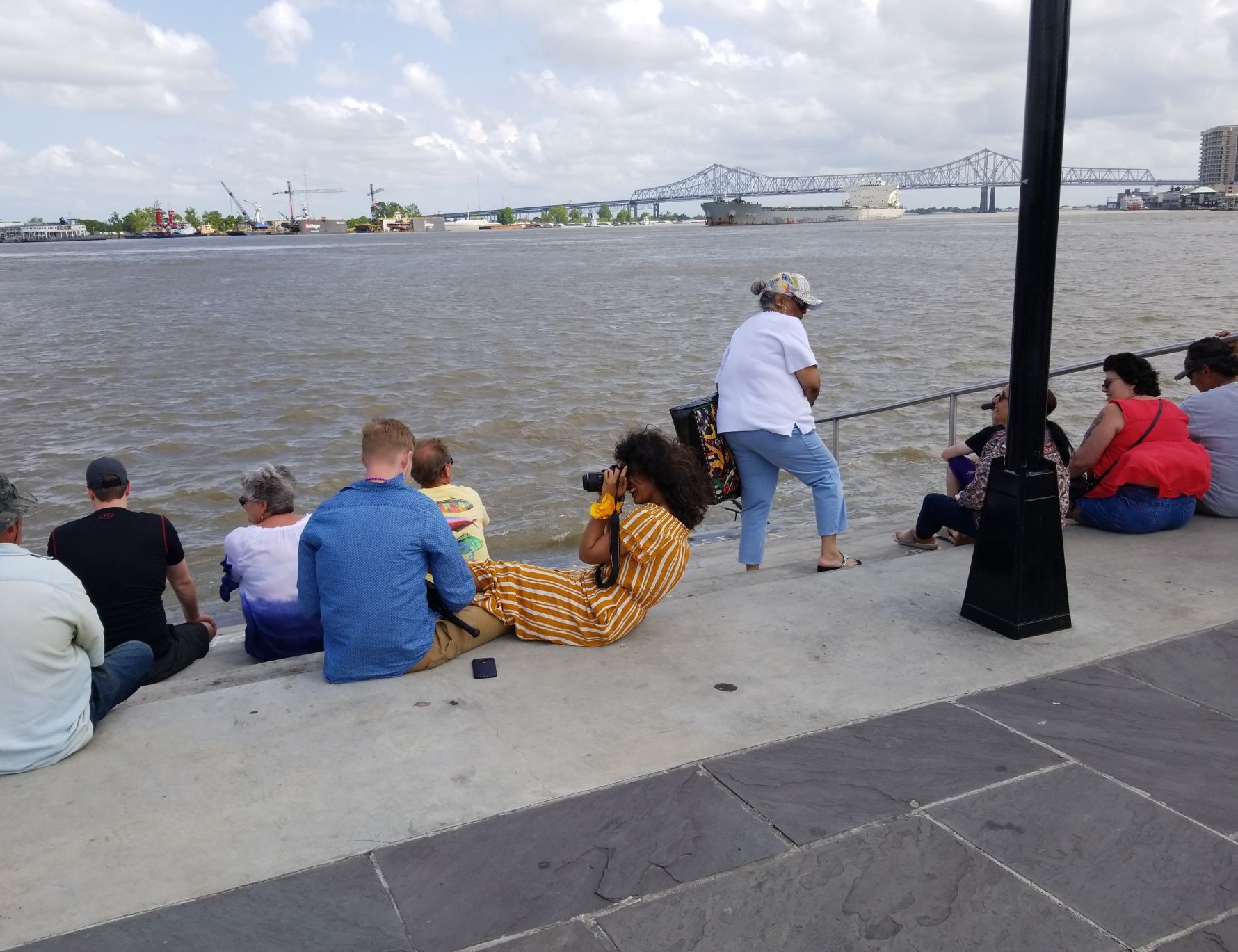 Heading south on the Riverwalk, you will pass by the Natchez, a steam-powered paddle-wheel riverboat. You can take a river cruise or continue your walk. The Natchez offers jazz and dinner cruises. Right around the corner from the steamboat, you will walk into Woldenberg Park. The park provides some shaded benches to hide from the heat and humidity. The park is also home to the “Monument to the Immigrants” statue.
Further south on this Riverwalk, you can stop at the Audubon Aquarium and the giant screen auditorium. Both places are worth a visit if you have time. The giant screen plays nature movies—some in 3D. We especially enjoyed the “Hidden Pacific” movie, which taught us about some protected islands and their wildlife. Going even further, you will come across the “Outlet Collection at Riverwalk,” a discount shopping mall with many well-known brands and a large food court.
You can see a more detailed description of this walk here.
Hop-On Hop-Off Bus Tours
 Are you tired of walking the streets of New Orleans? One of the best ways to explore a new city is to go on a walking tour or get multi-day transportation passes. The City Sightseeing tour company offers a “Hop-On Hop-Off” bus pass with narration and 19 stops. You can buy a 1-day or 3-day pass. The stops include essential points of interest in the French Quarter, the Garden District, and Lafayette Cemetery.
Book your New Orleans Tour here.
Interesting Fact: It’s illegal to ride on a Mardi Gras float in New Orleans without a mask. The mask tradition is a way to ensure anonymity during the festivities.
One of the stops is at Mardi Gras World. If you missed the main event, you can still visit to see the floats and try on some costumes. If you buy the 3-day pass, you will also get two free walking tours. As you go across town, a tour guide provides valuable information about landmarks, attractions, and restaurants along the way.
Food Tasting Tour
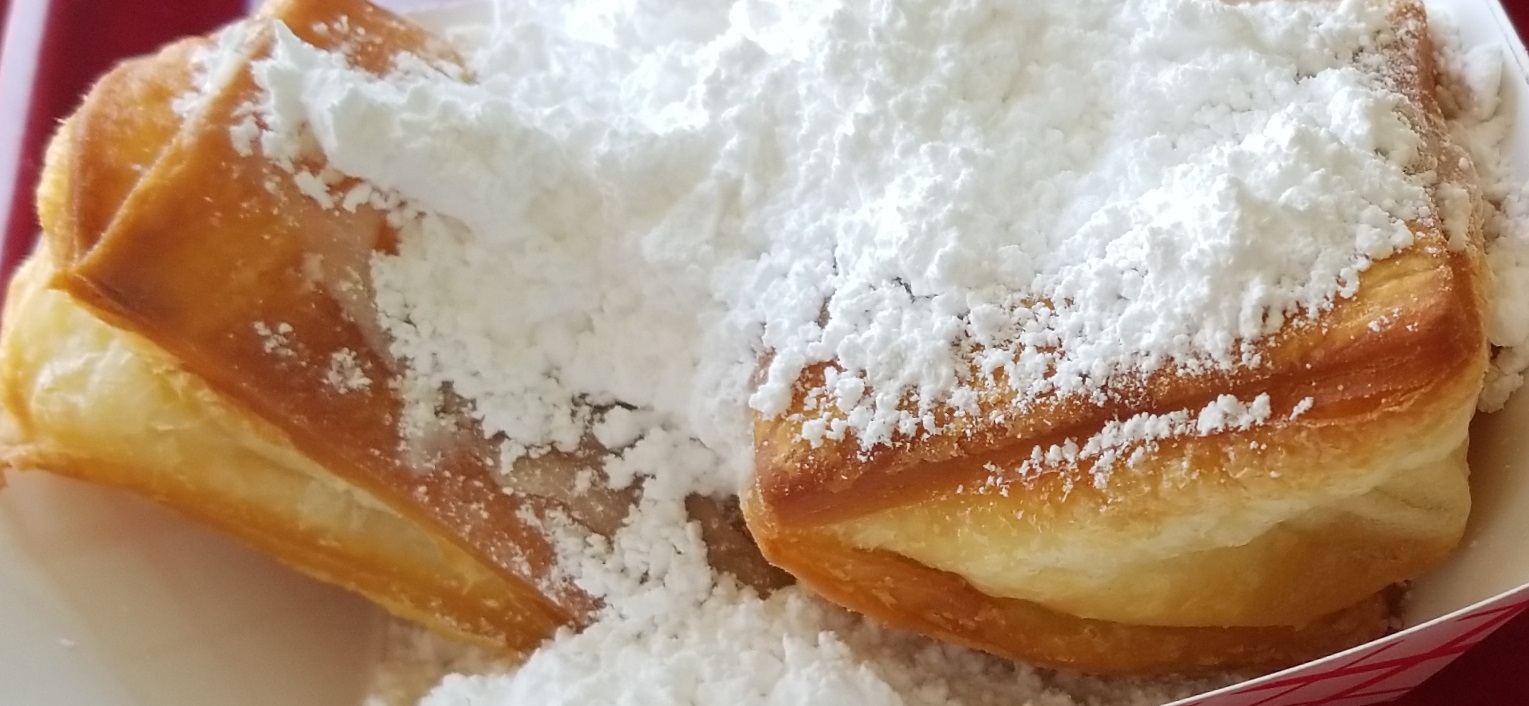 Here is another excellent way to explore a new city. Just join a food-tasting tour. Going on a food-tasting excursion is especially important in New Orleans due to the unique fusion of cuisines from around the world. We went with Urban Adventure on their “French Quarter Food Tour” and we loved it. The food choices were an exquisite representation of New Orleans Cajun and Creole food.
Interesting Fact: Despite its reputation for Cajun cuisine, the predominant type of cooking in New Orleans is Creole, which is a more refined, urban style of cooking that incorporates French, Spanish, and West African influences.
Our guide, Butch, was a wealth of information about NOLA culture and history. Some of the foods we tried were gator sausages, muffuletta sandwiches, and Beignets.
Read more about the tour and other dining options here.
Jackson Square
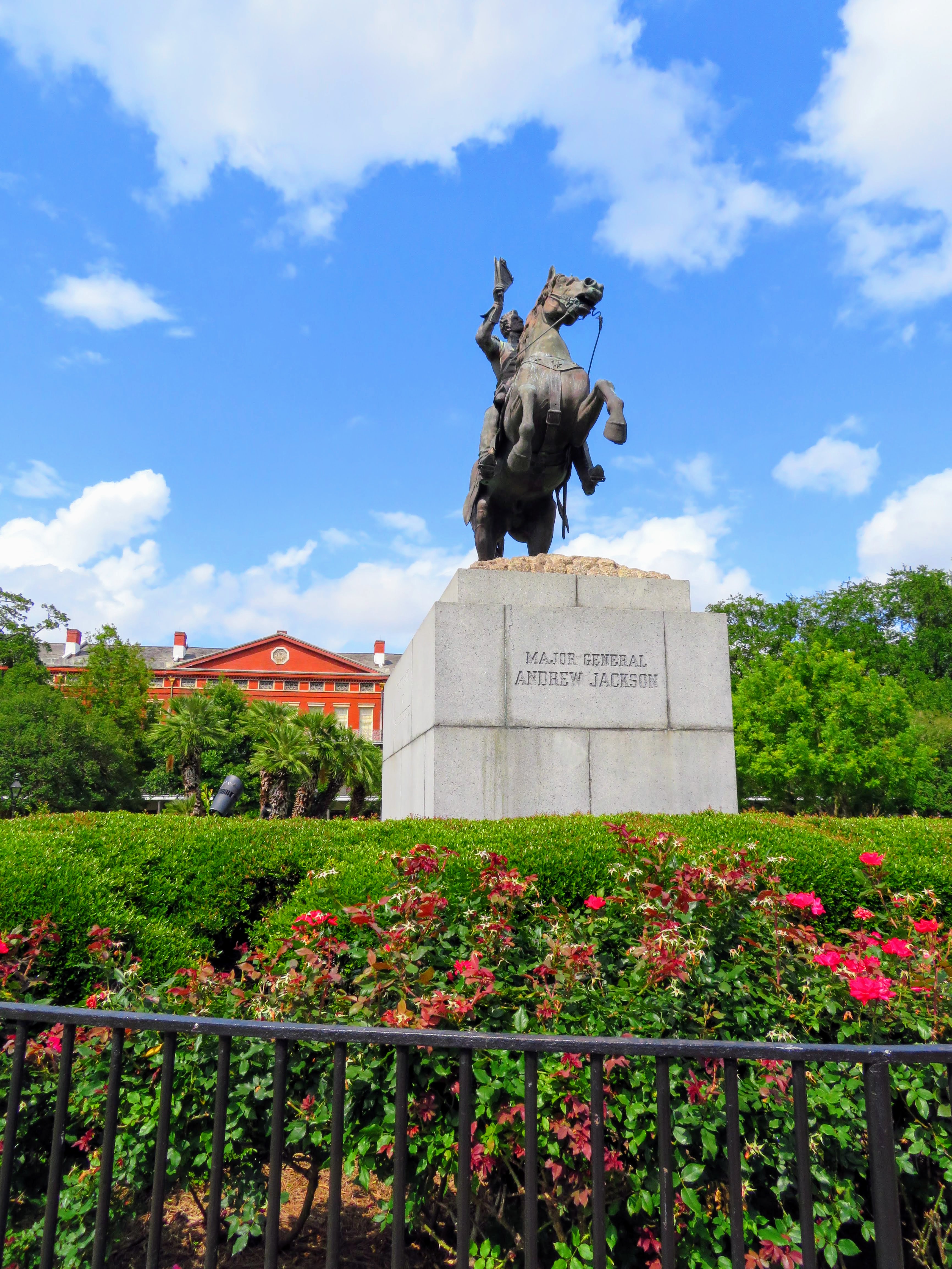 This historic park in NOLA is a focal point for many activities and attractions. The park was declared a national historic landmark in 1960 as the site where Louisiana became a US territory in 1803 due to the Louisiana Purchase.
Interesting Fact: New Orleans has more canals than Venice in Italy, both above and below ground, which are crucial for the city's unique drainage and flood control system.
The park is also home to the Andrew Jackson statue, celebrating the decisive battle of New Orleans. During our visit, we used the park as a resting place in between our explorations and as a springboard for visiting the surrounding Saint Louis Cathedral, the Louisiana State Museum, the Riverwalk, and the French Market. The area between the park and the cathedral is a pedestrian-only promenade with plenty of street performers, artists, and vendors. Walking around, listening to jazz musicians, or buying a few trinkets is a treat.
Saint Louis Cathedral
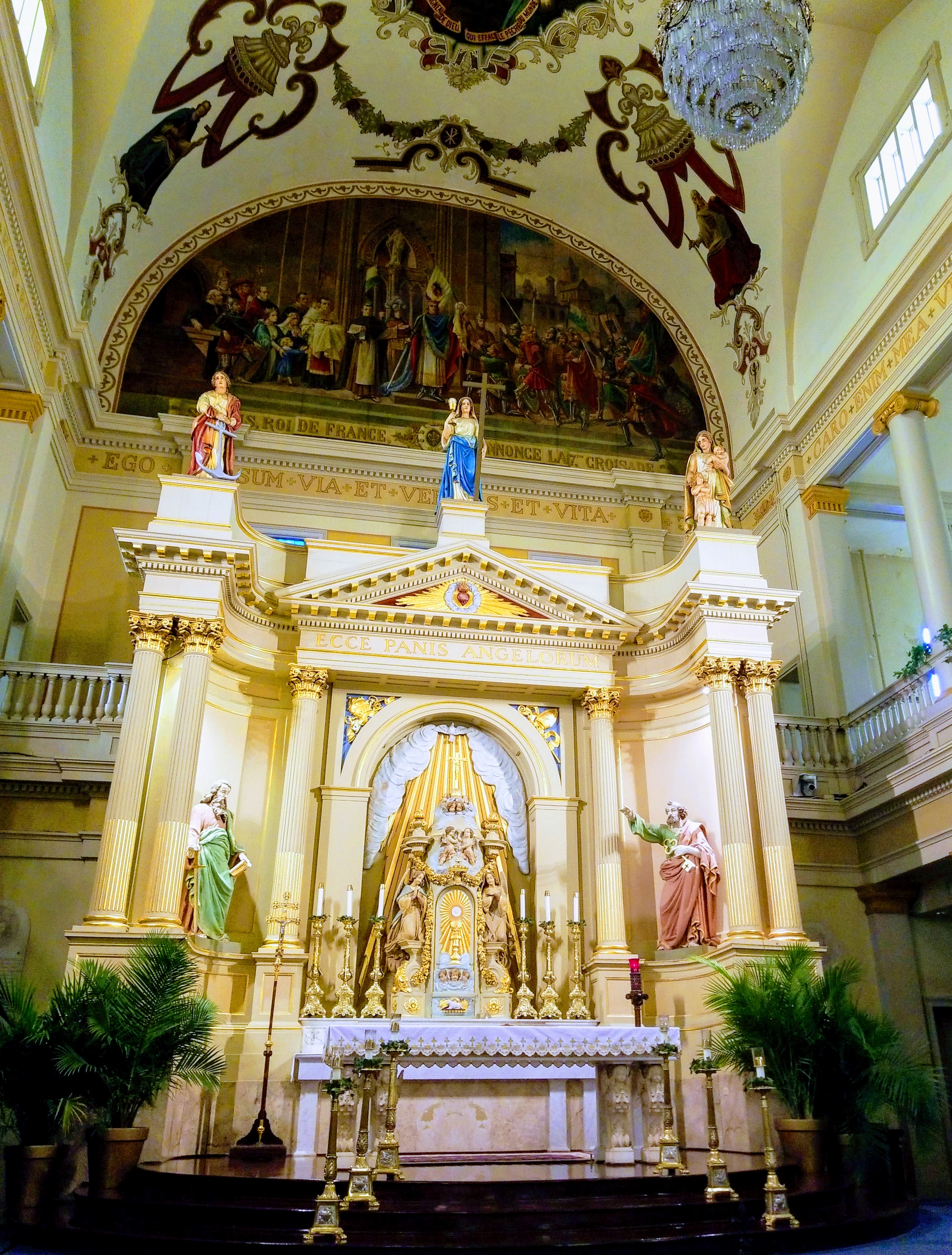 The Cathedral was first established as a church in 1718 but became a cathedral in 1793, and now it is the seat of the Roman Catholic Archdiocese of New Orleans. It is named after the King of France (King Louis IX). It is considered the oldest continuously operating cathedral in the United States. The architecture of this cathedral is beautiful and makes for an excellent backdrop for many photos as you look back from Jackson Square and Washington Artillery Park. Going inside, you can enjoy the grandeur of the ornate fixtures, majestic altar, wall and ceiling paintings, and beautiful stained-glass windows.
New Orleans Sightseeing Pass: Free Entry to 20 Attractions in New Orleans
The cathedral is open to the public for viewing and photography, but not during Mass.
Louisiana State Museum
 Right next to St. Louis Cathedral and inside the Presbytere building, you can browse through two uniquely New Orleans exhibits. The first one is a sobering account of Hurricane Katrina. The exhibit details the catastrophic wind and storm surge, breaking levees, and the delayed and uncoordinated response.
Interesting Fact: The Superdome is one of the world’s largest steel domes. It protected some 30,000 New Orleans residents during Hurricane Katrina in 2005.
Some moving moments for me were seeing the crowds hiding in the Superdome and listening to news accounts of the impending disaster. The city has learned from the mistakes of 2010, and the museum also showcases the advances in protection against hurricanes. The second exhibit is about the Mardi Gras, New Orleans' infamous festival. Several rooms explain the history of the festival, traditions, and costumes. It also gives a glimpse into the extravagant balls.
Interesting Fact: NOLA has some unique Mardi Gras traditions, such as the elaborate Balls thrown every year to honor the royalty of the Mardi Gras parades.
This museum has another branch on the other side of the cathedral, which is dedicated to Louisiana history.
The French Market
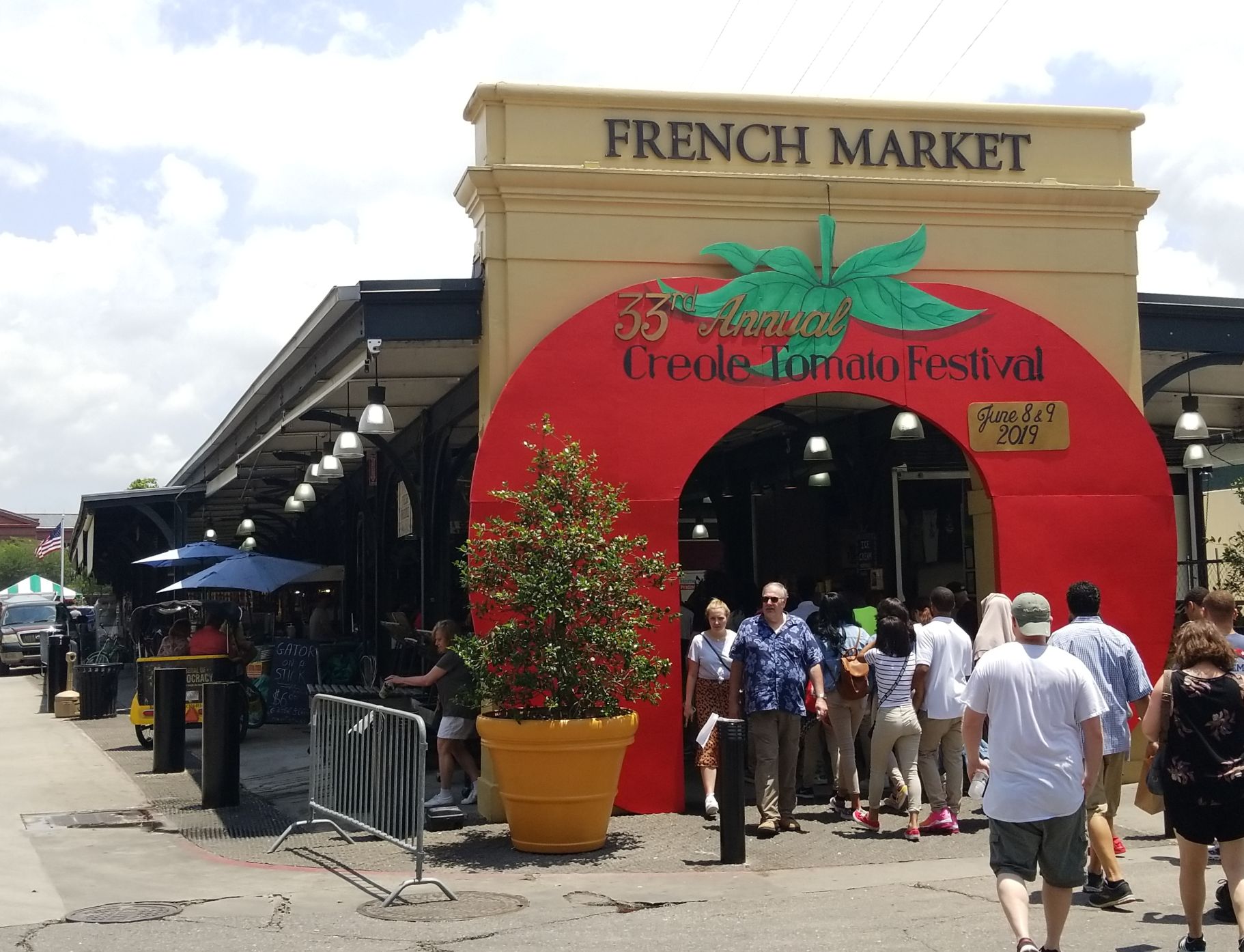 The market starts from Café Du Monde, close to Jackson Square, and extends along the Mississippi River for several blocks. This spot started as a Native American trading post—long before the Frenchmen landed here. Today, it is a bustling bazaar with vendors to satisfy every taste and need. You can find lots of food and sweets vendors, along with clothing, hats, and all kinds of trinkets. The market is an ideal place to enjoy some Creole food on the go or pick up some souvenirs. We tried Gator Sausage on a stick and Praline cookies during our visit.
Horse Carriage
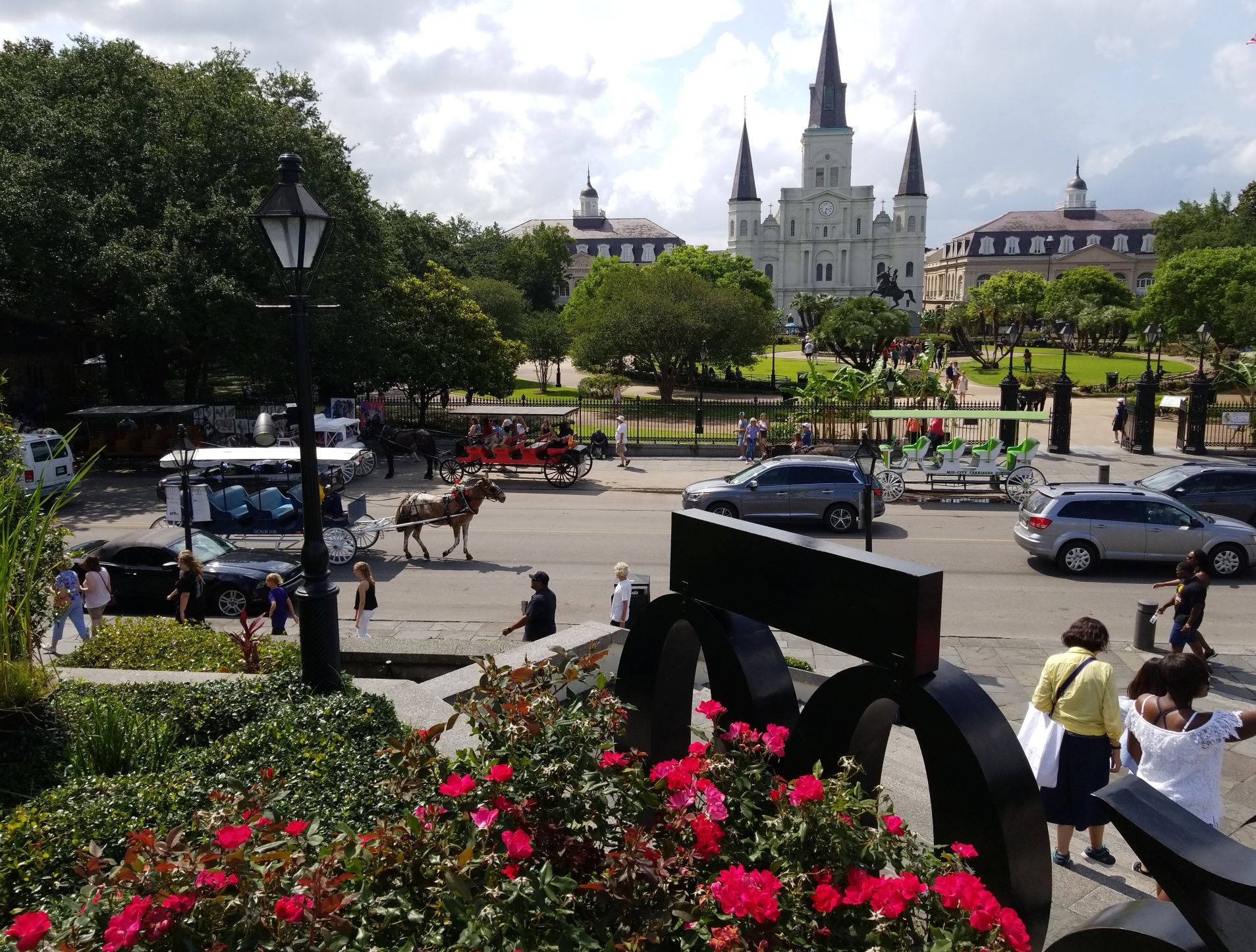 Take a leisurely ride on a horse carriage and learn about NOLA. The carriages are parked right outside Jackson Square on Decatur Street.
Interesting Fact: The death mask of the French military and political leader, Napoleon Bonaparte, is housed in the Louisiana State Museum in New Orleans.
The rides are $20 per person and go through narrow French Quarter streets while the driver talks about the city’s history and culture.
Audubon Aquarium
 Why would you go to an aquarium in the Big Easy? There is only so much adult fun a person can handle—especially when you have kids along. They will want to drag you to an aquarium or a zoo. The aquarium is conveniently located on the Riverwalk at the edge of the French Quarter, with an adjacent Big Screen theater and a butterfly garden. The aquarium is run by the Audubon Institute, which also manages a Zoo and an Insectarium.
 The aquarium specializes in the Americas, with separate exhibits for the Gulf of Mexico, the Mississippi River, and the Amazon Rain Forest.
We especially enjoyed:
- The 30-foot glass tunnel with sharks, fish, and stingrays floating above us.
- The Amazon Rain Forest with waterfalls and a treehouse-like structure.
- The seahorse display and the white alligator.
As part of your admission fee, you can watch a nature movie on a giant screen. Some movies are in 3D. We watched The Hidden Pacific, a film about chains of protected islands and the wildlife that makes them home.
Segway Tour
 If horse-drawn carriages are not your style, try the Segway tour. Riding a Segway offers a unique experience, allowing you to go where pedestrians go, but much faster. The City Segway tour staff were friendly and helpful. We started with a brief training session in the tour office. The Segway basically drives itself, but pay attention to how you stop, turn, and get off.
Interesting Fact: Famous people from NOLA include Ellen DeGeneres, John Goodman, Tyler Perry, and Reese Witherspoon.
During our tour, we zipped through narrow streets, learning about the Spanish character of the French Quarter and the Nuns' impact on early history, and visited Louis Armstrong Park. We rode through the Riverwalk and enjoyed the cool breeze on the way back.
New Orleans Museum of Art
 Located a little away from the French Quarter in the middle of a green expanse called “City Park,” the Museum of Art is a place to relax, enjoy the creative works of artists, and maybe have a snack. The park itself is full of activities like fishing, a Botanical Garden, miniature golf, and paddle boats. Have a picnic, work out, or head into the Art building for more fun.
Interesting Fact: City Park is the largest municipal park in the USA, with lakes, huge oak trees, and many activities for the whole family.
 The museum has several levels of exhibits with more than 40,000 pieces of art. The artworks span various eras and styles. The collection includes French, American, African, and Japanese photography and glasswork. The extensive Americas collection covers the cultural heritage of North, Central, and South America, spanning the pre-Columbian period through the Spanish Colonial era. If you don’t have time to visit the art collection in person, take this virtual tour.
The museum has a café overlooking the park and lake. Café NOMA uses locally sourced fresh ingredients to create its tasty sandwiches and pastries. It was named one of ‘America’s Best Museum Restaurants’ by Travel + Leisure.
The National WWII Museum
 A museum dedicated to World War II, America’s contribution, and the Allied victory. I regret not having the chance to visit while in NOLA, but I believe it is essential to include it in this article. The museum spans several buildings with exhibits about the Arsenal of Democracy, Road to Tokyo, Road to Berlin, The D-Day Invasion of Normandy, US Merchant Marine Gallery, Bayou to Battlefield, and occasional Traveling Exhibits. You can also enjoy some interactive experiences like “Final Mission: USS Tang Submarine” and “Beyond All Boundaries,” a 4D journey through the war that changed the world.
A Little Outside of New Orleans
The city of New Orleans is full of landmarks and attractions. You can spend days roaming the city without seeing everything. But whatever you do, take the time to get out and experience a Swamp Tour and a Plantation visit.
Swamp Tour
 Swamps are an integral part of Louisiana's history and culture. In case you didn’t know, countless people still make the wetlands their home and live off the land. The best way to explore the swamps is to go with an experienced tour operator. We went with Cajun Encounters, and we had a great time.
Interesting Fact: Louisiana is home to three million acres of wetlands, which play a vital role in the state's ecosystem and protect the coastline from storm surges.
 Our guide, Captain Ron, was very knowledgeable and made our trip fun and educational. During this tour, we took an airboat into the swamps and got very close to alligators, birds, and pigs. Yes, surprisingly, pigs do live in those swamps.
Interesting Fact: Alligators have existed for nearly 200 million years, and over two million wild alligators live in bayous across Louisiana.
We also visited some swamp dwellings and observed the Cajun people going about their daily lives. As a compromise to modern life, we saw a parking lot where Cajuns park their cars after work or shopping. They then jump onto their boats to get to their homes in the swamp.